What is geo-fencing in security attendance?
Geo-fencing defines a virtual boundary around a physical site using GPS coordinates and a configured radius. In attendance workflows, it ensures clock in/out actions are only allowed when the user is within the approved site perimeter.
Without geo-fencing
Clock-ins can occur from any location, which increases the chance of proxy or off-site attendance.
With geo-fencing
Clock in/out is validated against the site radius, improving integrity and compliance.
Why fake attendance is a serious operational risk
Fake or off-site clock-ins reduce security coverage and create compliance gaps. In multi-site operations, manual verification becomes expensive and inconsistent. Over time, it can affect audit outcomes, vendor performance, and payroll accuracy.
- Reduced real coverage on the ground
- Higher audit exposure due to unverifiable logs
- Inaccurate payroll and overtime claims
- Lower supervisor visibility and delayed interventions
How geo-fencing solves the problem
A geo-fence forces a location check before completing attendance. This makes the system harder to manipulate and easier to supervise. Depending on your policy, you can either block the action or log a violation for follow-up.
How ISMS implements geo-fencing
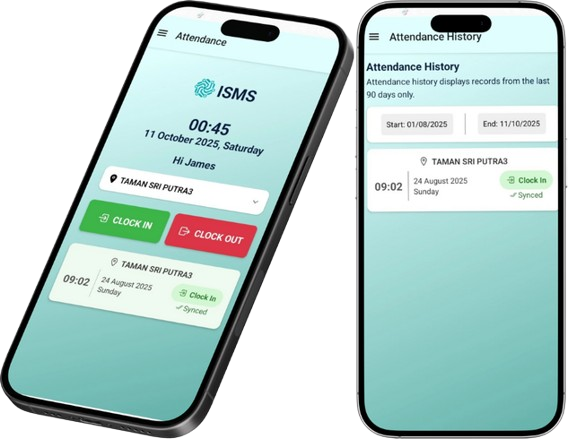
ISMS enables per-site configuration so each location can have the appropriate radius and enforcement rule. You can apply geo-fencing together with optional controls such as selfie verification, barcode scanning, and supervisor alerts.
Getting started
Start with one site as a pilot. Configure the site radius, enable location-based clocking, and review the logs for exceptions. Once stable, roll out site-by-site to standardize your attendance controls.